China Top 10 Educational Toys vs Traditional Toys?

Time:2026-10-19 Author:Amelia
0%

Choosing between modern educational toys and traditional toys is rarely a simple question of price or popularity. In this guide, we compare China’s top 10 educational toys with familiar traditional options, including wooden blocks, puzzles, dolls, kites, and board games. The focus is practical: learning value, durability, safety, creativity, and children’s real play experiences.

Parents often ask, “what are the differences between educational and traditional toys?” Educational toys may teach counting, language, coding, or problem-solving through guided activities. Traditional toys usually offer fewer instructions, allowing children to invent stories and rules. A colorful coding robot may keep a child engaged for twenty minutes, while plain wooden blocks can support an entire afternoon of construction. Neither choice is automatically better.

Our comparison considers age suitability, material quality, battery use, screen dependence, and adult supervision. We also examine how each toy performs beyond its packaging claims. Some educational products look impressive but become repetitive quickly. Some traditional toys appear basic yet encourage deeper cooperation and imagination. Results can vary. A child’s interests, home environment, and developmental stage matter greatly.

The selected toys will be assessed using reliable product information, safety guidance, and practical observations where available. We will avoid treating rankings as permanent facts, because new designs and user feedback can change their value. The strongest choice may not be the most expensive or technologically advanced. It may be the toy that a child returns to, modifies, shares, and remembers.
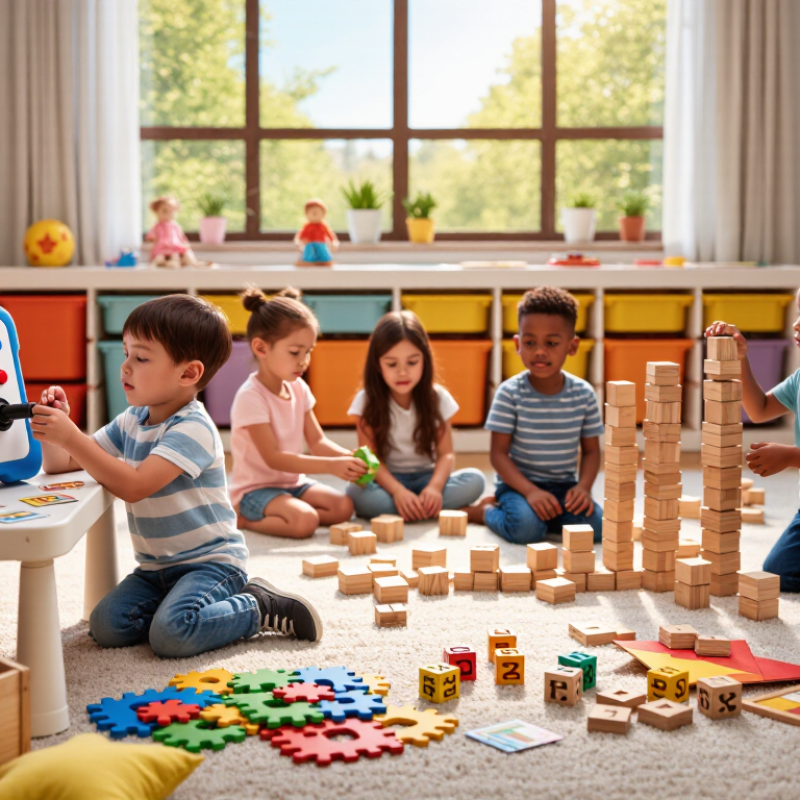
China Top 10 Educational Toys vs Traditional Toys?

What Makes a Toy Educational or Traditional?

An educational toy has a clear learning purpose, not merely bright colors or an “IQ-building” label. It invites children to practice counting, language, spatial thinking, coordination, or cooperation. The child should make choices and receive meaningful feedback. A puzzle that allows repeated attempts teaches differently from a toy that only flashes correct answers.

Traditional toys can also be educational. Wooden blocks, dolls, balls, and paper cards often support imagination, movement, storytelling, and social negotiation. Their learning is less scripted. The boundary is messy. A block may become a bridge, a phone, or nothing special that afternoon. This uncertainty is valuable, although adults may find it difficult to measure.

Professional evidence supports this broader view. UNICEF’s Learning Through Play report identifies play as a practical path for developing cognitive, physical, social, and emotional skills. The American Academy of Pediatrics also links play with executive-function development in its 2018 clinical report.

Market data adds useful context: Circana’s 2024 Global Toy Industry Report reported a 7% decline in worldwide toy sales during 2023, increasing pressure on buyers to judge value carefully.

In my experience, the strongest test is simple: can a child explain, build, pretend, or solve without constant adult direction? I would still question any product promising fast intelligence gains. Labels are imperfect, and cultural expectations can change how learning appears.

China’s Top 10 Educational Toys and Their Learning Benefits

China Top 10 Educational Toys vs Traditional Toys?

China’s educational toy market is moving beyond simple entertainment. The top ten choices include building blocks, jigsaw puzzles, counting boards, science experiment kits, coding robots, magnetic tiles, language cards, art sets, geography games, and role-play tools. Each supports a different learning benefit. Blocks develop spatial reasoning. Puzzles train persistence. Counting boards make early mathematics tangible. Science kits encourage prediction and observation. Coding robots introduce sequencing through visible movement. Magnetic tiles support design thinking, while language cards strengthen vocabulary. Art sets build fine-motor control. Geography games expand spatial awareness, and role-play tools improve communication.

Industry evidence supports this shift. Grand View Research estimates the global educational toys market will grow strongly through 2030, driven by demand for STEM and problem-solving activities. Circana’s 2023 global toy report recorded a 7% decline in overall toy sales, suggesting that families may examine value more carefully. A well-designed educational toy must therefore offer repeated use, not only bright packaging. This is where traditional toys still matter. A wooden train, doll, or ball can encourage storytelling, coordination, and social play without complex instructions.

The limitation is easy to miss. Not every “learning” toy creates meaningful learning. Children may press buttons repeatedly and learn very little. Adult guidance changes the result. The OECD’s research on early learning also emphasizes active engagement and interaction, rather than passive screen-like experiences. From classroom observation, the strongest products leave room for mistakes, rebuilding, and slower discovery. That may sound less impressive, but it often produces deeper learning.

How Traditional Toys Support Learning and Cultural Development

When children handle traditional toys, learning begins through touch, movement, and patient trial. A wooden spinning top teaches balance, timing, and the effect of force. Paper folding develops spatial thinking while introducing patterns from local craft traditions. These experiences feel slower than many electronic learning tools. That slowness matters. Teachers often observe children negotiating rules, repairing mistakes, and explaining play to younger classmates.

Traditional toys also carry cultural memory. A cloth puppet can reflect regional clothing, stories, or family celebrations. A painted shuttlecock may connect movement with neighborhood games and older generations. Children learn history through action, not only through printed explanations. Parents can ask who made the toy, why its shape matters, and how its rules changed. Such questions turn play into shared research. Still, tradition is not automatically educational. Some games exclude children with different abilities or reinforce outdated social roles. Adults should adapt materials and rules without erasing cultural meaning.

Compared with commercial learning toys, traditional objects are often open-ended and inexpensive. A few stones, sticks, or paper pieces can support counting, storytelling, and design. They invite children to create new rules. Yet they may need safety checks, durable materials, and age-appropriate supervision. That balance is imperfect. A child might fold a paper figure incorrectly, then invent a better one and teach it to a friend.

Educational Toys vs. Traditional Toys: Key Differences

Educational toys and traditional toys differ mainly in purpose, structure, and adult involvement. Educational toys usually target skills such as counting, language, memory, or spatial reasoning. Traditional toys often leave the rules open, inviting children to invent stories, roles, and solutions. The boundary is not clean. A wooden block can teach geometry, yet it can also become a bridge, shop, or rocket.

Market data reflects growing interest in structured learning. Grand View Research estimated the global educational toys market at about USD 57 billion in 2023, with strong projected growth through 2030. However, Circana reported a 7% decline in global toy sales during 2023. This contrast suggests demand is becoming more selective. Parents may want measurable learning value, but children still need simple play without constant instructions. In practice, a screen-free puzzle with bright pieces may develop persistence, while a plain cardboard box may produce richer pretend play.

The American Academy of Pediatrics links play with cognitive, physical, social, and emotional development. Educational toys can support these areas when their difficulty matches the child’s age. Traditional toys often encourage longer, less predictable play sessions. That freedom matters. I have seen children abandon advanced activity sets quickly, then spend forty minutes building roads with blocks. Product labels can promise too much. A toy does not teach automatically; conversation, repetition, and room for mistakes make the difference.大小规律

China: Top 10 Educational Toy Categories vs. Traditional Toys

Comparison of learning-support scores across ten popular toy categories. Scores are based on a 1–5 rubric covering problem-solving, skill progression, feedback, and purposeful learning; they are category-level comparisons, not brand or sales data.

Key takeaway: Educational formats generally provide more structured learning, measurable progression, and immediate feedback. Traditional toys remain valuable for open-ended imagination, social interaction, and self-directed play.

Choosing the Right Toy by Age, Skill, Safety, and Play Style

China Top 10 Educational Toys vs Traditional Toys?

Choosing a toy in China’s market starts with age, not advertising. Infants need large, washable pieces, soft textures, and simple cause-and-effect play. Avoid loose parts for children who still explore with their mouths. Preschoolers often benefit from stacking sets, puzzles, drawing tools, pretend-play kits, and basic building blocks. These toys strengthen language, coordination, and early problem-solving.

Older children may enjoy science kits, coding boards, strategy games, magnetic construction sets, and craft materials. Check the recommended age carefully. A challenging toy can build patience, but an advanced toy may create frustration.

I have sometimes chosen a clever-looking set that was too difficult. The child stopped after ten minutes. That was my mistake.

Traditional toys still offer quiet value. Wooden blocks, paper, balls, dolls, and simple puzzles leave room for imagination. Educational toys may provide clearer skill goals, while traditional toys often support flexible, social play. Look for smooth edges, secure battery covers, non-toxic materials, and readable safety information. Inspect toys regularly for cracks, loose magnets, peeling paint, or damaged cords. Supervision matters, especially with small parts and water-based activities. Match the toy to the child’s play style: a careful builder needs time, while an active child may learn better through movement. Personal interest matters more than a long feature list.

FAQS

What are the main educational toys discussed in the article?

The list includes building blocks, puzzles, counting boards, science kits, coding robots, and magnetic tiles. Language cards, art sets, geography games, and role-play tools are also included.

How do building blocks support learning?

Building blocks develop spatial reasoning through stacking, balancing, and arranging shapes. A child might build a bridge, then rebuild it after the structure falls. That mistake is useful.

Can traditional toys provide educational benefits?

Yes. Wooden trains, dolls, balls, and cardboard boxes can support storytelling, coordination, and social play. A simple box may become a shop, house, or rocket. Open-ended play matters.

Do educational toys teach children automatically?

No. A toy needs active engagement, conversation, and repeated use. A child may press buttons repeatedly without understanding the underlying idea. Adult guidance can improve the experience.

What can puzzles and counting boards help children learn?

Puzzles can strengthen persistence, visual matching, and problem-solving. Counting boards make early mathematics more tangible through movable pieces. Children can touch, count, separate, and regroup objects.

How do science kits and coding robots encourage thinking?

Science kits invite children to predict, observe, and compare results. Coding robots introduce sequencing through visible movement. The robot may turn, stop, or move incorrectly. That result deserves discussion.

Are structured educational toys better than traditional toys?

Not always. Structured toys target specific skills, while traditional toys encourage flexible stories and invented rules. A child may leave an advanced kit untouched but build roads with blocks for forty minutes. Toy labels can promise too much.

How should adults choose a suitable educational toy?

Choose a toy matching the child’s age, abilities, and interests. Look for safe materials, clear instructions, and room for mistakes. Repeated play matters more than bright packaging. I may still misjudge a child’s preference.

Conclusion

This article explores what makes a toy educational or traditional and how both types contribute to a child’s development. It introduces China’s top 10 educational toys, highlighting benefits such as problem-solving, creativity, language growth, coordination, and early scientific thinking. It also explains how traditional toys support imagination, social interaction, cultural understanding, patience, and hands-on learning through simple and often open-ended play.

The article clearly examines what are the differences between educational and traditional toys, including their goals, structure, learning methods, and play experiences. Rather than presenting one type as universally better, it offers practical guidance for choosing toys according to a child’s age, abilities, safety needs, interests, and preferred play style. By combining meaningful educational features with the cultural and creative value of traditional play, parents and caregivers can create a balanced play environment that supports joyful, well-rounded development.

Amelia

Amelia

Amelia is a seasoned marketing professional with a wealth of expertise in our company’s core offerings. With an unwavering passion for driving growth and innovation, she plays a pivotal role in shaping our marketing strategies and enhancing brand visibility. A key aspect of her responsibilities......